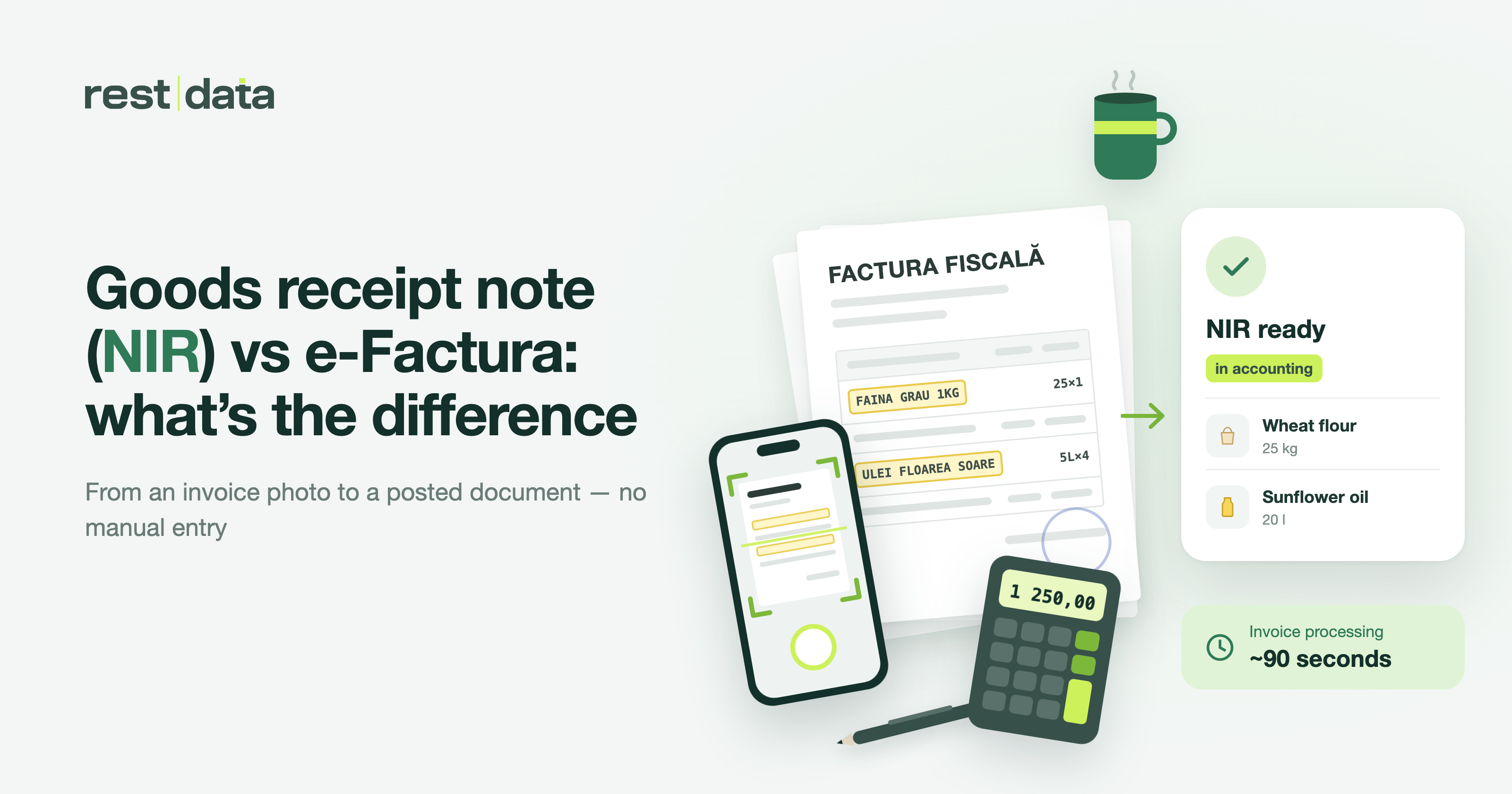
What a NIR actually is, and where e-Factura ANAF fits
A NIR — a goods receipt note — is the document that records what physically arrived at a restaurant or retail location: the quantities, the prices, the supplier. It's the term used daily on the warehouse floor and in the back office. e-Factura ANAF, by contrast, is the electronic invoicing layer — the formal tax document exchanged through a government system.
These are not the same object, and they don't come from the same place. A NIR is created when goods are received and checked against what was ordered. An e-Factura is the invoice itself, the one that moves through official channels. In practice, a business needs both: the receipt note for internal stock and accounting records, and the invoice for tax compliance.
It's worth being precise here: RestData does not file or validate e-Factura ANAF documents, and it doesn't touch Romanian tax filing at all. e-Factura SFS is the government system RestData integrates with — and that's a Moldovan system, not the Romanian ANAF one only. If your question is specifically about ANAF filing obligations, that's outside what this product does, and it's worth checking directly with an accountant or the relevant tax authority.
Where RestData sits in this chain
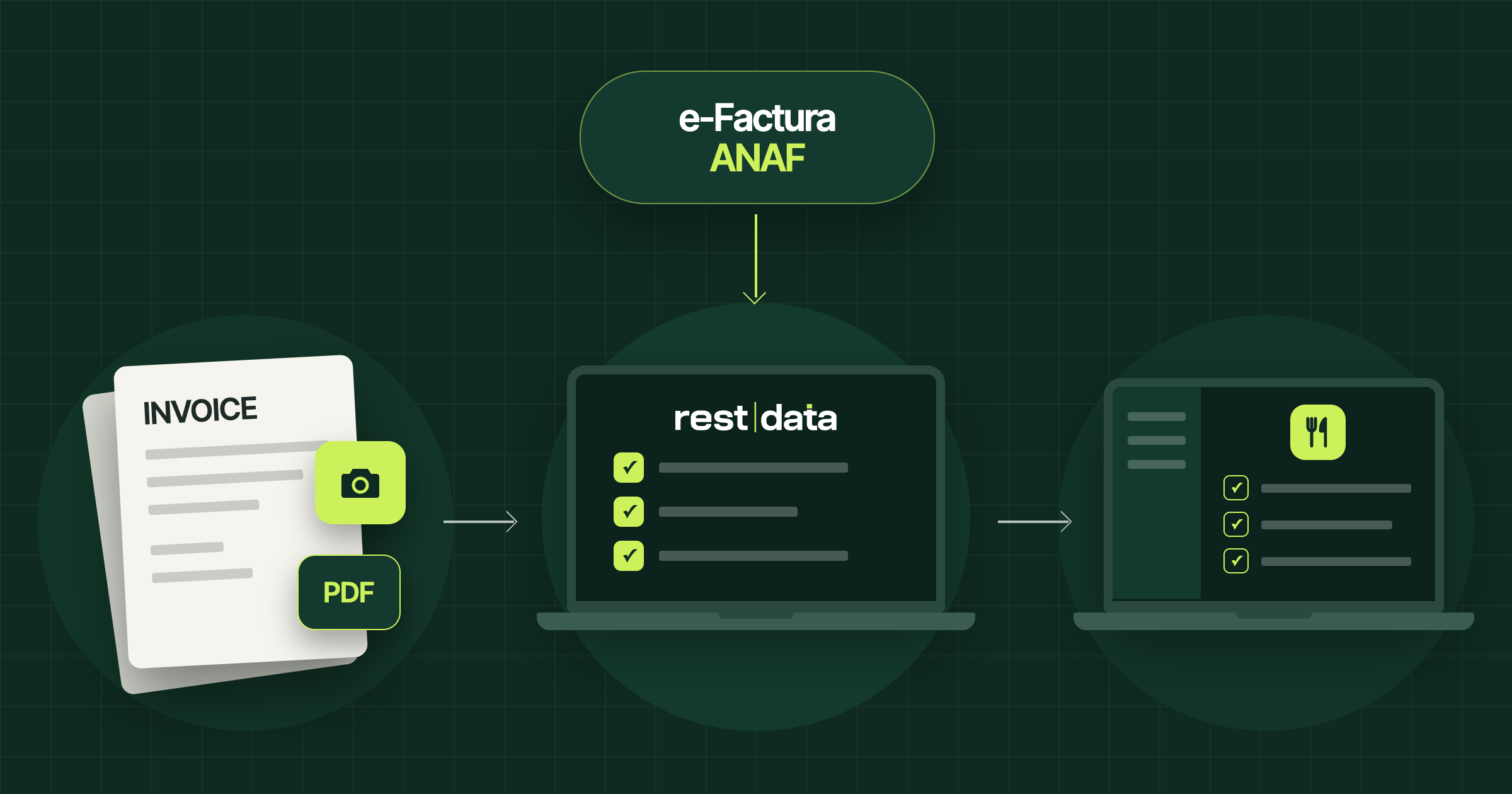
What RestData actually does is sit at the point where a paper or digital invoice turns into a structured document inside your accounting or inventory system — the step that, in many back offices, ends with someone typing a NIR by hand.
The flow looks like this:
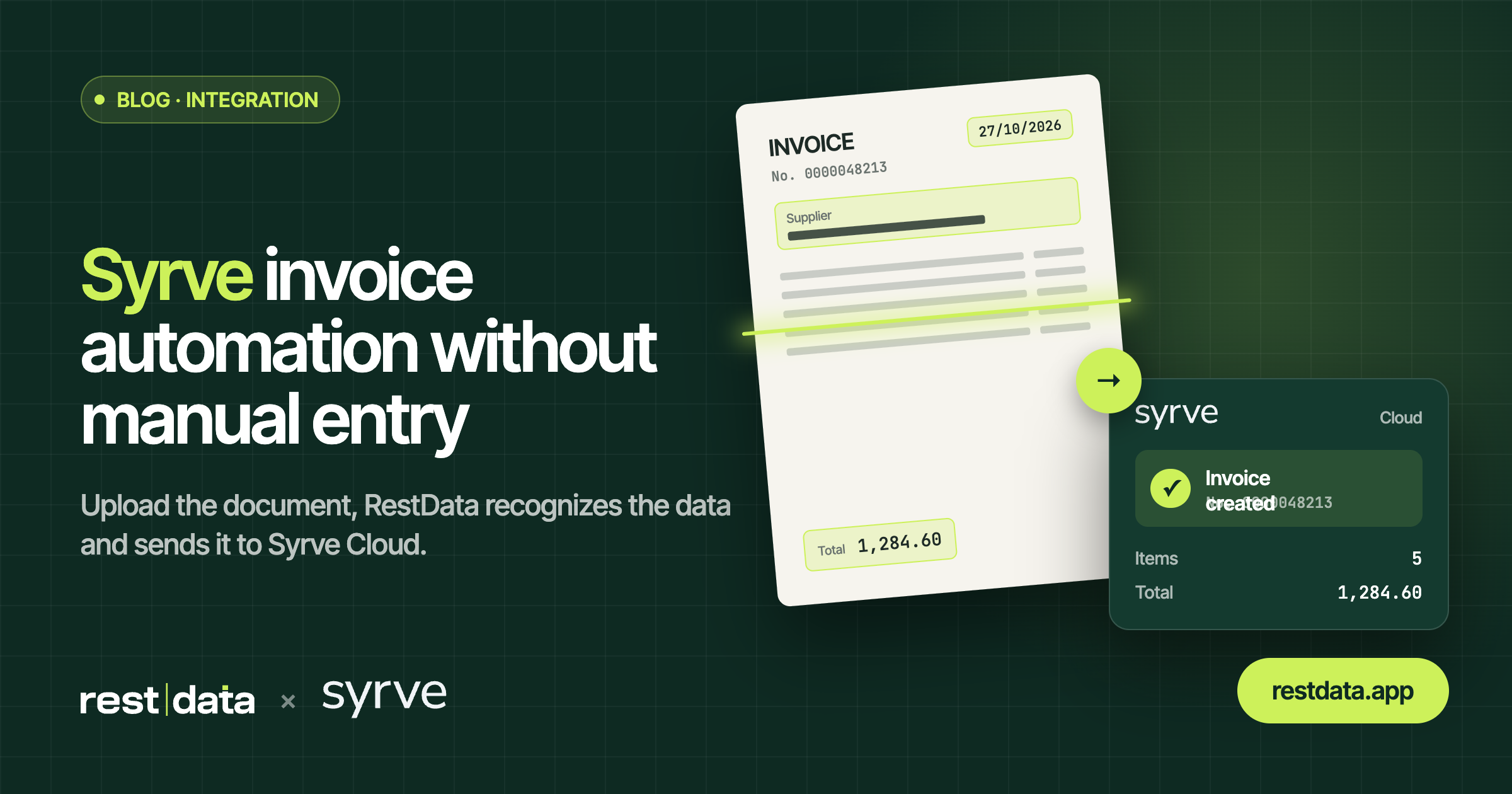
- Upload the document — a PDF, a photo, or a phone scan; PNG, JPG, HEIC are all accepted, and you can upload several files at once.
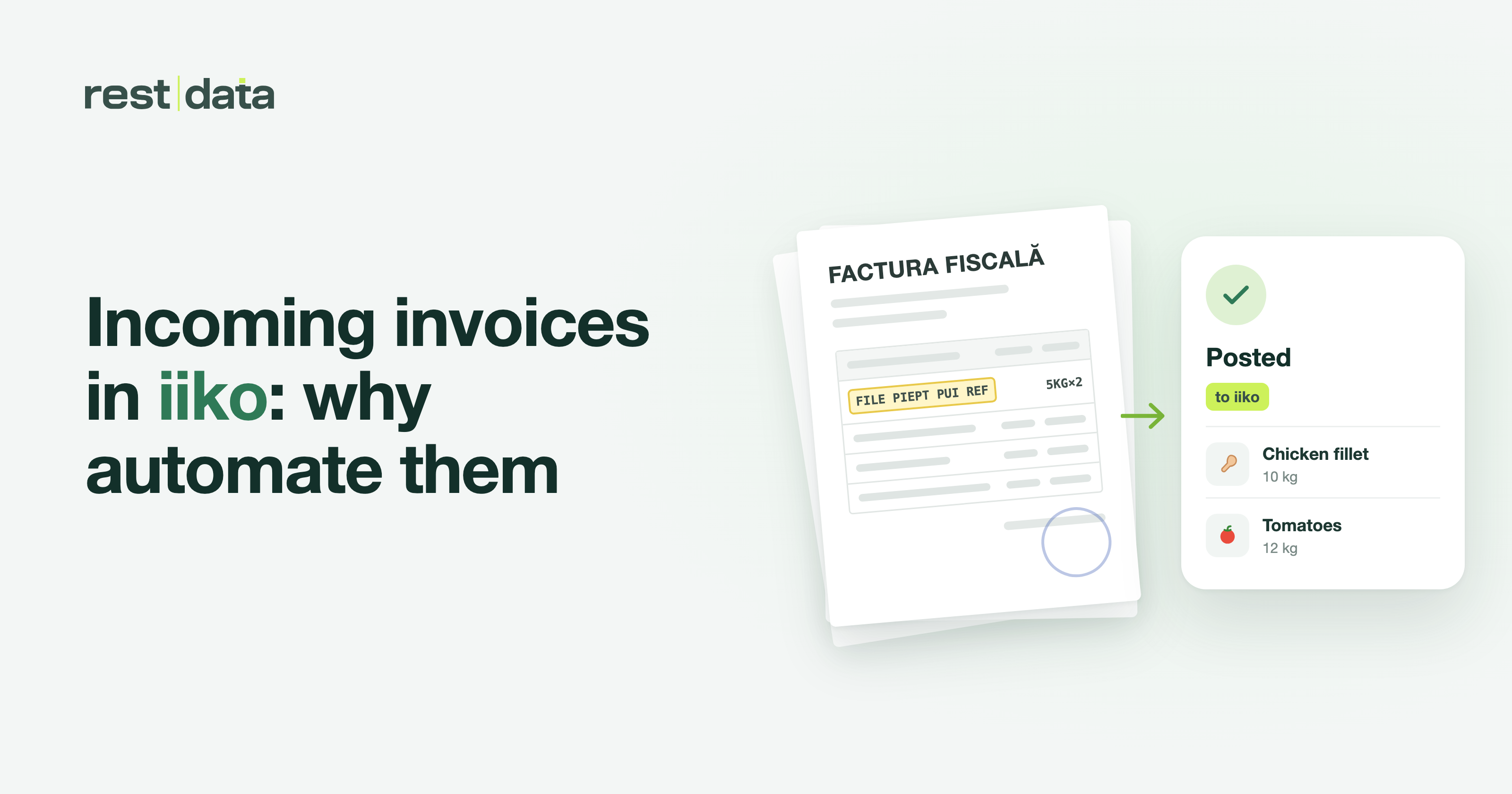
- Recognition and matching — line items are extracted, totals are calculated, and products are matched to your catalog. Next time, the same product is found automatically.
- Export — the finished document is sent into your accounting system.
One invoice takes about ~90 seconds to process this way. That's the number that matters for anyone replacing manual NIR entry with something faster — not a promise about tax compliance, just about how quickly a document moves from photo to posted record.
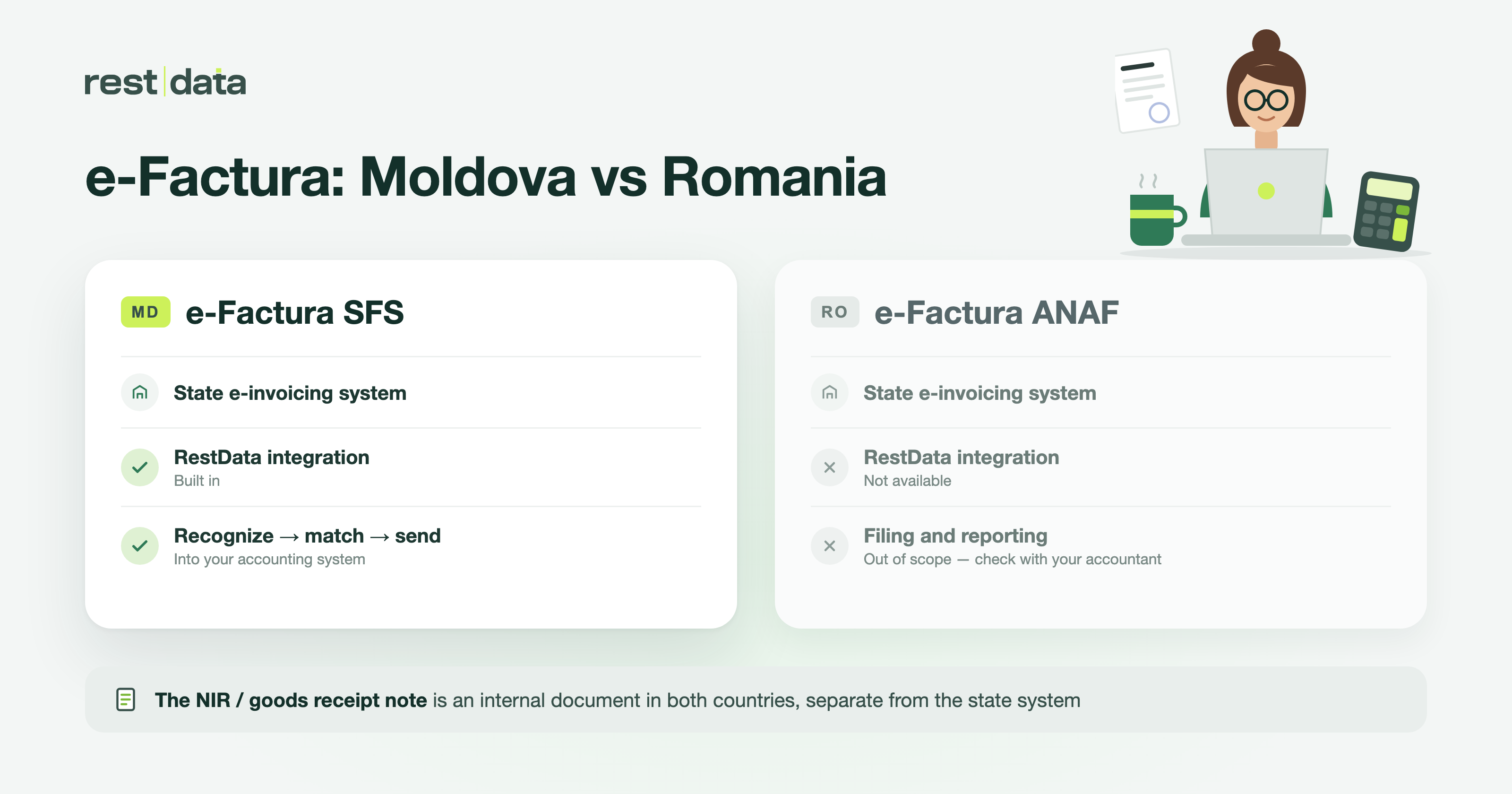
Where this fits for Moldova vs. Romania
| Moldova (e-Factura SFS) | Romania (e-Factura ANAF) | |
|---|---|---|
| System type | Government electronic invoicing | Government electronic invoicing |
| RestData integration | Yes, built in | Not available |
| NIR / receipt note role | Internal document, separate from the government system | Internal document, separate from the government system |
| What RestData does | Recognizes invoice, matches to catalog, exports to your system | Not part of RestData's scope |
What to check before relying on either system for compliance Does your accounting flow require e-Factura SFS submission, or is your question actually about ANAF filing rules in Romania? These are two different systems, and mixing them up is the most common source of confusion — RestData connects to the Moldovan one, and makes no claims about the Romanian one.
What RestData covers, and what it doesn't
RestData recognizes invoices, matches items to your catalog, and exports the result — it's built around that document flow, described in more detail under how it works. It connects to accounting and POS systems through its integrations, including e-Factura SFS, Syrve, iiko, METRO, 1С, and TrioBar.
What it does not do: it doesn't keep your books, doesn't calculate taxes, doesn't replace your accounting system, and it doesn't give tax or legal advice. If a question touches ANAF rules, VAT filing, or anything regulatory, that's a conversation for an accountant or tax authority — not something answered inside the product.
Setup takes about 5 minutes, and the first 30 invoices are free, so it's a low-friction way to see whether automating the receipt side of your workflow — the part that currently ends in a manually typed NIR — is worth it for your volume. Details on pricing and more on what the product does are worth a look if that's the question you're actually trying to answer.